Aquaculture Improvement Partnerships

Aquaculture Improvement Projects

 
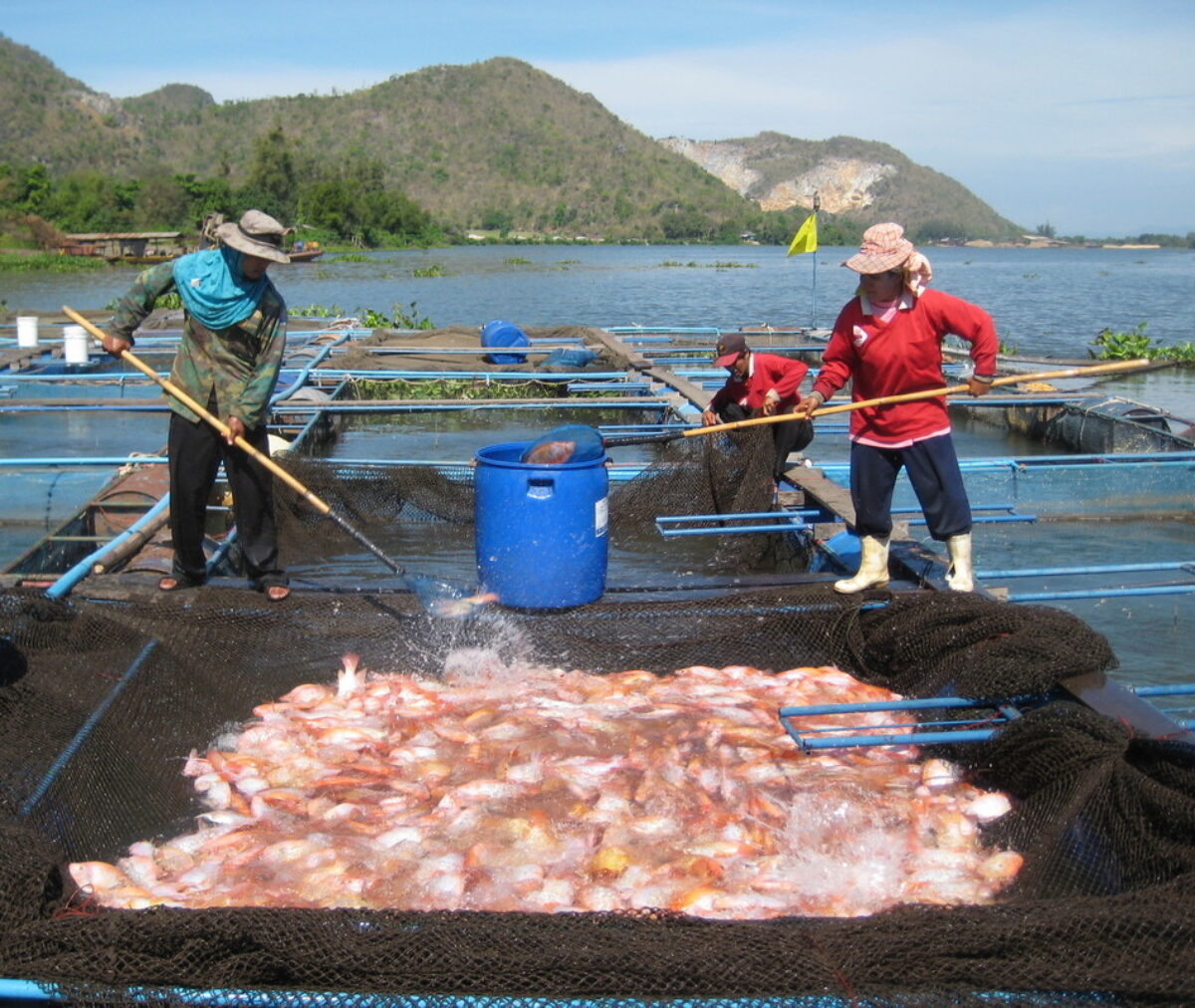
An Aquaculture Improvement Project (AIP) is an alliance of producers, processors, suppliers, and buyers working together to address sustainability issues in a fish-farming region. The region may be defined by a common water input/discharge source (canal, river, aquifer, reservoir); a government-designated administrative division such as a production zone, development plan area, or “park”; and/or a geographic feature such as an island, valley, or coastal area. AIPs work to reduce environmental impacts of aquaculture particularly on a regional level, by engaging farmers, suppliers, policy makers/regulators, and NGOs to improve practices, policies, and management.
 
SFP's  role is to engage, inform, educate, and empower the supply chain to work together to solve collective regional farming environmental issues that not only impact local lives and livelihoods but also may have negative impacts on continuity of supply, as well as perceived quality concerns in the marketplace.
 
AIPs complement national and regional aquaculture laws and regulations, as well as better practices as defined in various international aquaculture standards. Depending upon the species and region, an AIP will have a number of specific objectives aimed at identifying and mitigating negative environmental impacts and also preventing catastrophic failures which have occurred in the past, such as bacterial and viral diseases (e,g, infectious salmon anemia) in Chilean salmon and white spot disease in tiger shrimp. An AIP takes a holistic approach to regional oversight and thus includes taking into account the collective and cumulative impacts of all farms within a region, whether certified to an international standard or not. An AIP is not a certification or an ecolabel. 
 
Prior to launching an AIP, regional assessments are carried out to understand environmental impacts and issues within a designated farming area. This information is used to prioritize improvements by the AIP, as well as to advise major players in the supply chain about the role they can play in the AIP.  Sometimes, the results of the assessment indicate that issues can be addressed adequately through improvements by individual farms.  In those cases, SFP itself does not implement an AIP. Instead, SFP advises major buyers to engage with and support the work of other organizations that are working to improve individual farms in the region (e.g., certification standards, technical extension programs).
 
The primary aim of an SFP AIP is to reduce the cumulative and combined impacts of aquaculture practices that can arise from poor water usage practices, over-density of farms, incorrect (inappropriate) zoning/siting, inefficient feed management, and insufficient coordination of disease treatment.  AIPs can also serve as forums in which farmers share lessons learned regarding better practices and can work together to press for improvements in other sectors that impact their operations, such as nonpoint source pollution from upstream agriculture or industry.

The SFP AIP program works with key aquaculture species that are marketed commercially, with a current focus on those that are consumed in North American and European core markets where there is a strong demand for sustainability such as tilapia, pangasius, shrimp, and salmon.  


Related Documents

Click to Download

A Comparison of Tilapia Aquaculture Certification Schemes (SFP Preliminary Report, May 2011) (PDF)

A review of the regulation of salmon farming in Scotland (PDF)